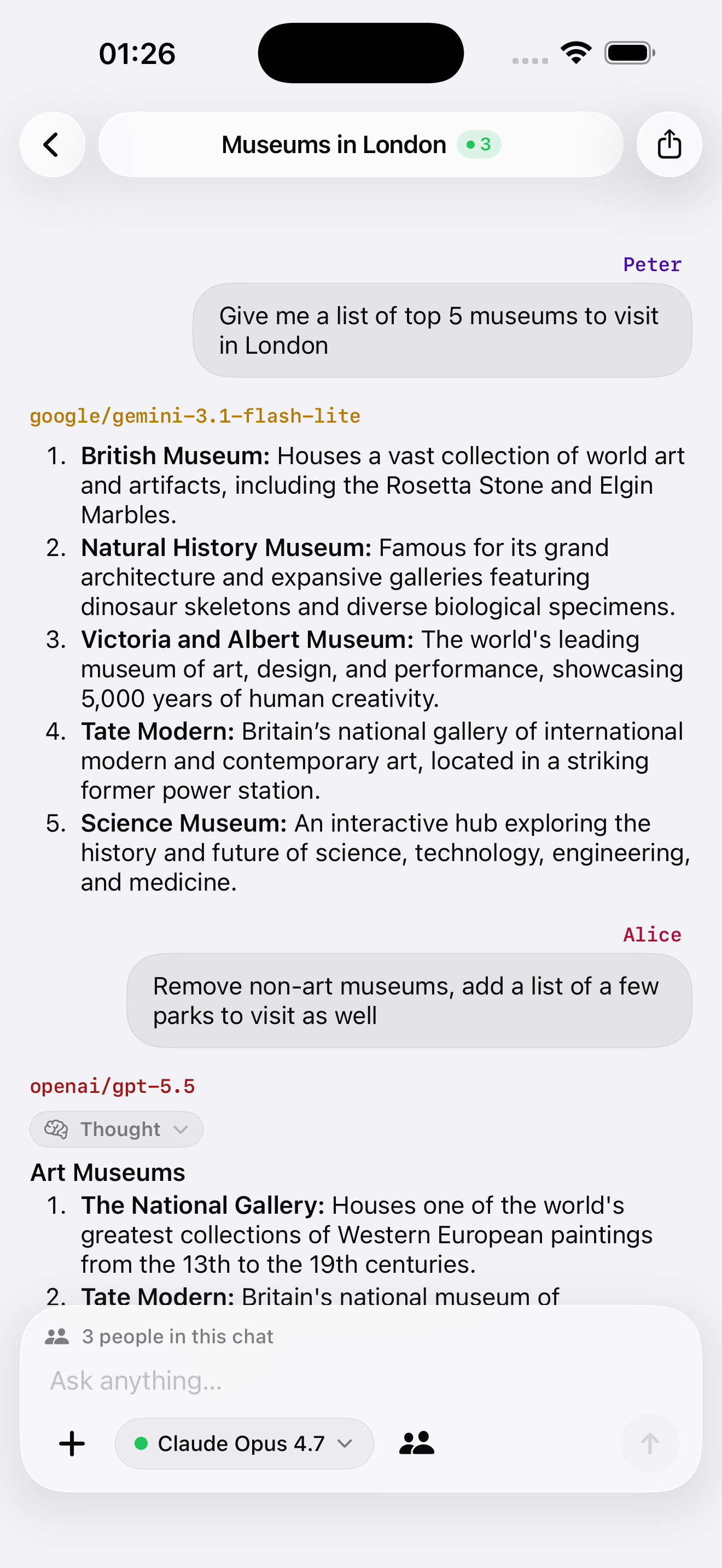
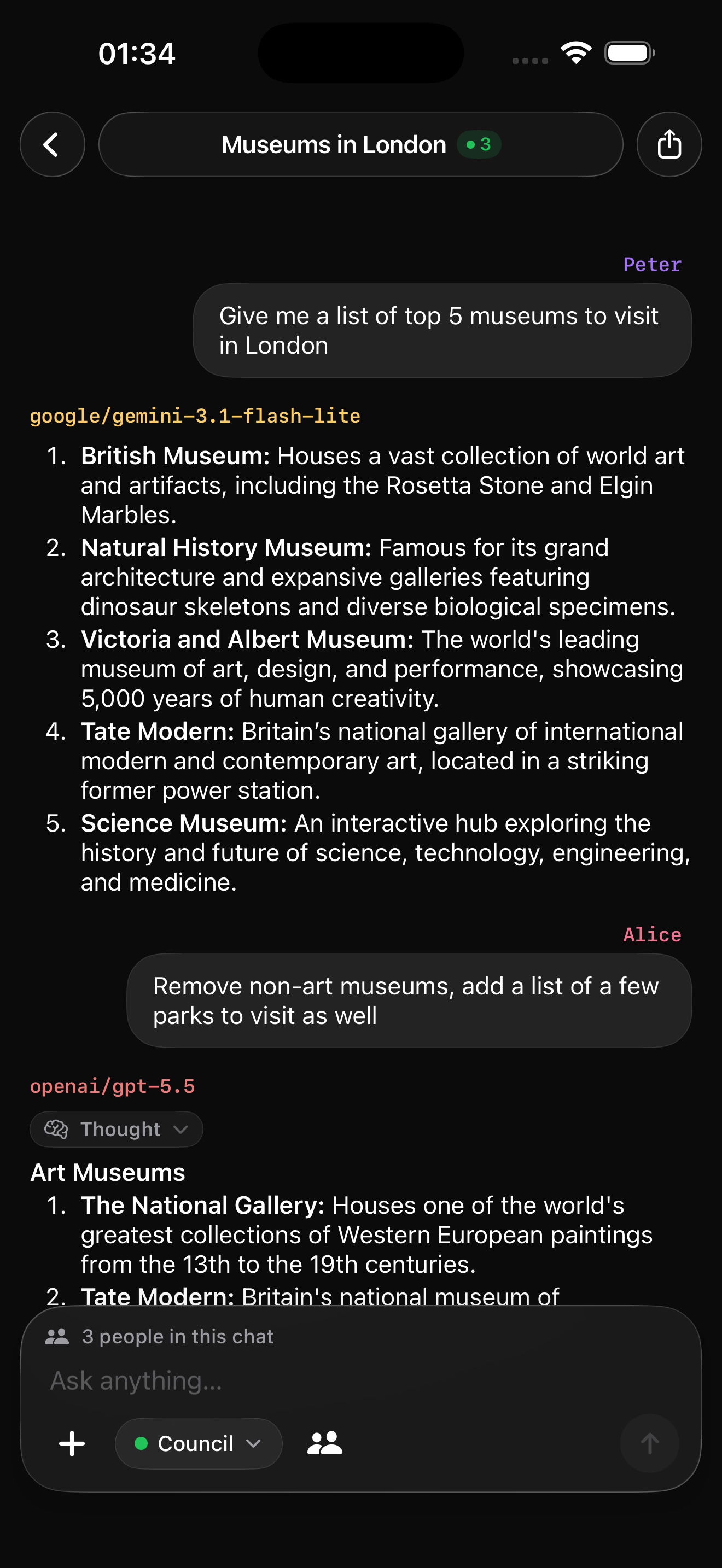
Put both sides of the role in one conversation
The recruiter understands the candidate market. The hiring manager understands the work, the team, and what success should look like. An AI chat started by only one of them sees only half of that picture.
A shared Unium chat lets both people contribute directly. The recruiter can add market language and recurring candidate questions. The hiring manager can correct priorities, explain trade-offs, and refine what is genuinely required.
Build a clearer brief together
Use the shared thread to turn scattered notes into a working hiring brief:
- Add the role objectives and constraints.
- Separate essential experience from preferences.
- Identify unclear or exclusionary language.
- Draft candidate questions and interview themes.
- Record changes after the intake meeting.
Because both people see the same history, the next revision does not depend on a forwarded summary that may omit the reason behind a decision.
Keep the hand-off visible
Recruiting work moves between people. A researcher may map the market, a recruiter may prepare outreach, and the hiring manager may review a shortlist. Shared chats and projects keep those hand-offs attached to their context.
Owners can invite participants as editors or viewers. A viewer can follow the reasoning without changing it; an editor can add information and ask the next question.
Use the right model for each task
You can use one model to structure intake notes, another to challenge the brief, and another to improve candidate-facing language. Switching between GPT, Claude, Gemini, and other available models does not create a new thread or lose the shared context.
For a small agency, one prepaid wallet can cover the team without a subscription for every occasional participant. Monthly member limits and visible usage help keep the cost understandable during active hiring periods.
Do not delegate hiring decisions to AI
Use AI to organise notes, improve clarity, draft communications, and prepare questions. Do not use it as the sole basis for ranking or rejecting candidates. People remain responsible for fair processes, relevant evidence, privacy, and final decisions.
Avoid adding personal information that is not necessary for the task. Follow the organisation's hiring, retention, and data-protection policies, and review every candidate-facing output before use.