Why per-seat plans feel wrong for a household
Most AI products charge a flat monthly fee per person. That assumes everyone uses it about the same amount, every month, which is almost never true for a family or a small team. One person uses it heavily, a couple dip in now and then, and a few signed up and forgot. You still pay full price for every seat.
So you are funding a row of idle subscriptions to cover the one or two people who actually lean on it.
How wallets work
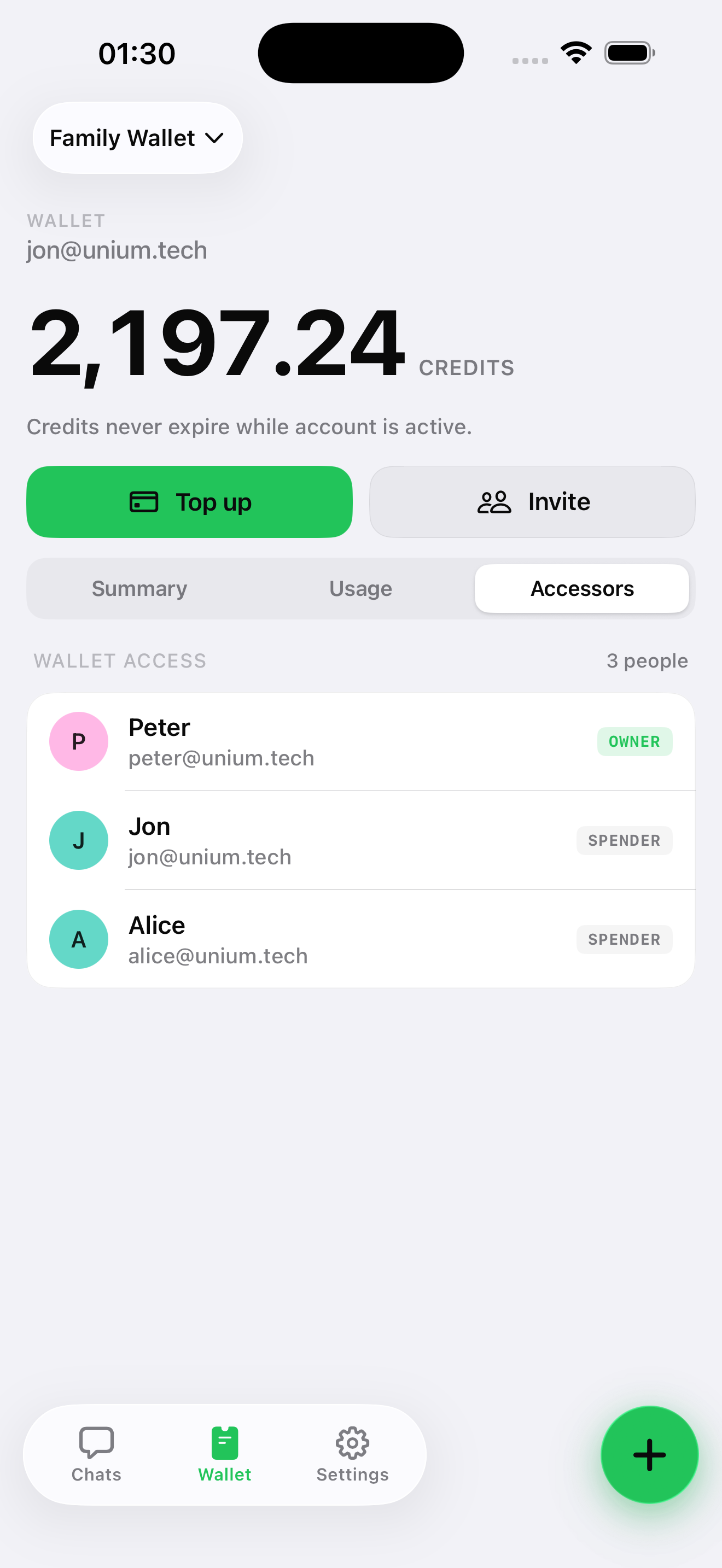
Unium does not work in seats. It works in prepaid credits held in a wallet, and a wallet can be shared.
You top up one balance. The people you share it with draw from it. Credits are only spent when someone actually uses a paid model or tool, so a quiet month costs almost nothing. Free models, where available, do not touch the balance at all. Paid models and extras like web search or image generation draw credits from whichever wallet you picked for that message.
When you can reach more than one wallet, you choose which one pays per message. So your own spending and the shared spending stay separate, and nobody has to keep a spreadsheet. Credits stay valid for up to a year, so topping up does not mean racing to use it before it expires.
What it is good for
- A family sharing one balance instead of buying a plan each.
- A small team covering AI from a common pot, without setting up per-user billing.
- One person funding a wallet for a less technical relative to use.
Paying and refunds
Top-ups on the web go through Paddle, and on iOS through Apple's in-app purchase. You can see the current credit packs on the pricing page, and purchases come with a 14-day money-back guarantee, explained on the refunds page.