
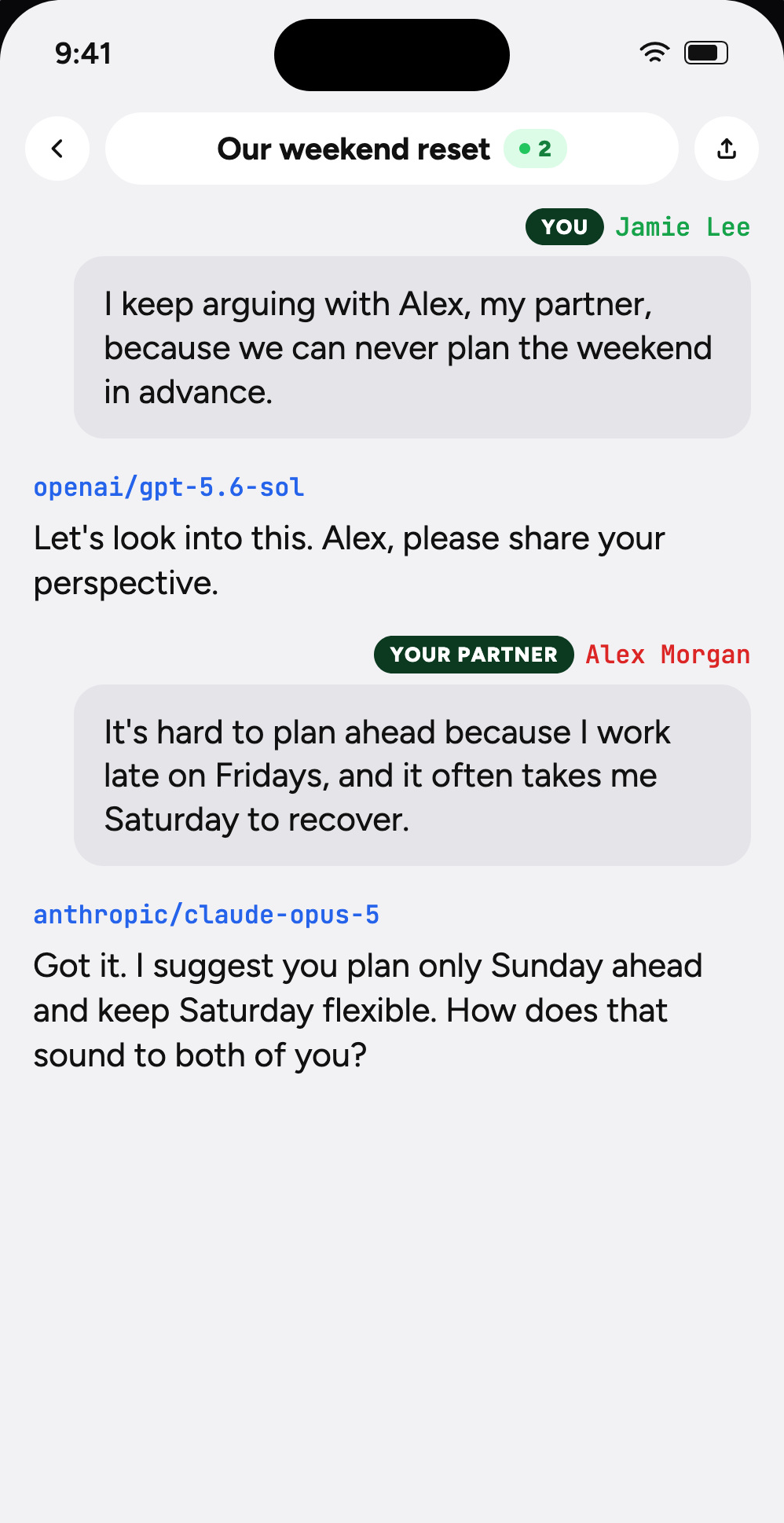
The AI only ever hears your version
When you ask ChatGPT, Claude or any other assistant about your partner, it gets one account of what happened, written by the person who is upset, at the moment they are most upset. It cannot ask the other person anything. It does not know what they meant, what they were reacting to, or what you left out because it did not seem important.
That is not a flaw in any one app. It is the shape of a chat with one person in it.
And it leans towards agreeing with you
Assistants are trained to be helpful to the person typing, and in practice that tilts them towards that person's view. OpenAI rolled back a ChatGPT update in 2025 because it had become too agreeable. Even a careful model, given only your side, will mostly help you make your side's case.
That feels good in the moment. It also sends you back into the conversation more certain you are right, carrying advice your partner never agreed to and a summary of them they would not recognise.
Put both of you in the same chat
A shared Unium chat changes the input, not just the answer. You send your partner one link and they join from their own phone, with their own account. The AI asks each of you for your side before it suggests anything, keeps track of who said what, and answers both of you in the same thread.
In the couples we have seen do well, the turning point was nearly always the moment the second version arrived. One partner thought their idea had been brushed aside; the other thought they had been left to manage the evening alone. Neither account was the whole story, and the AI could only see that with both of them in the room.
It asks for one real example
Instead of "we always argue about chores", the AI asks for one specific time: what was said, what each of you heard, what you needed. General complaints make people defend themselves. A single evening, looked at from both sides, usually shows the loop you are both caught in.
It ends with something written down
A good session does not end on a feeling. It ends with two or three small agreements, each owned by one of you, and the AI can put them on a card in the chat: a short live list you can both open and tick off, without sending a message. A pause rule, who handles which part of the house, what you will try this week.
It comes back to see how it went
A private chat waits for you to come back. Unium checks in. After a longer conversation it can set a time to follow up, and a few days later it asks whether the agreements held. That is often the most useful message of the whole thing, because it is when you find out whether anything changed. Either of you can answer it, and often it is the one who said less in the session.
Bring what was actually said
If the argument happened over text, you do not have to retell it. Export the WhatsApp chat and pick Unium in the share sheet, and the AI reads the actual messages rather than one person's memory of them. The import guide has the steps. If you have already talked it through with ChatGPT, share that conversation as a link and paste it in, and you both start from the same place.
It can step back
Sometimes you want to talk to each other and only bring the AI in when you get stuck. Ask it to stay out of it, or switch the chat to replying only when tagged, and it waits until one of you writes @Unium.
When a private chat is still the right call
Not everything should start with your partner reading along. Working out what you feel, or how to say something before you say it, is a good use of a private conversation, and Unium has those too: long press any chat and make it private. The difference is what comes next. When you are ready to talk it through, the other person can be in the room.
It is also not therapy. If the pattern is not shifting, or anyone feels unsafe, see a professional. Using AI alongside couples therapy covers how the two fit together.