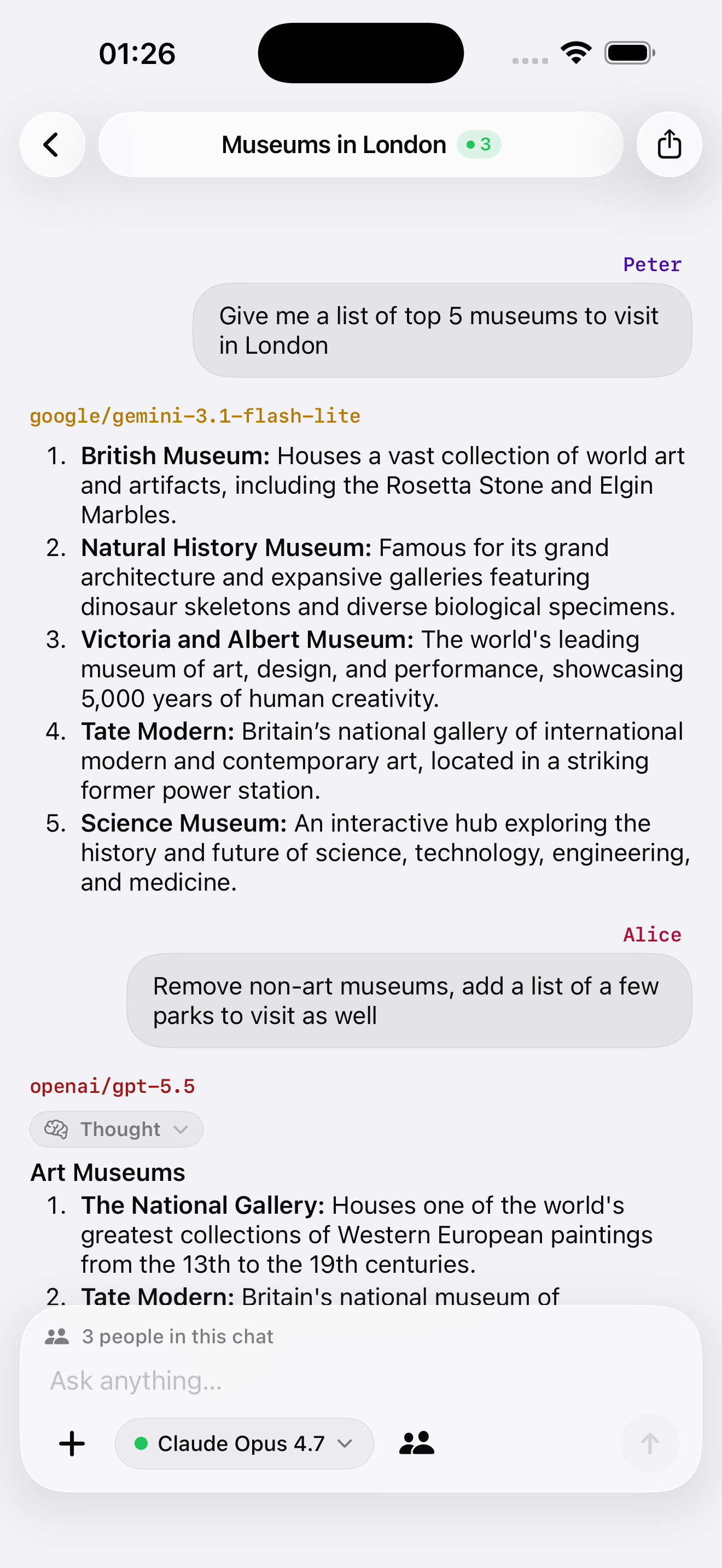
Let the client see the working conversation
An AI-generated draft often arrives without the discussion that shaped it. The client sees the answer, but not the assumptions, alternatives, or questions behind it. That creates another round of explanation in email or a meeting.
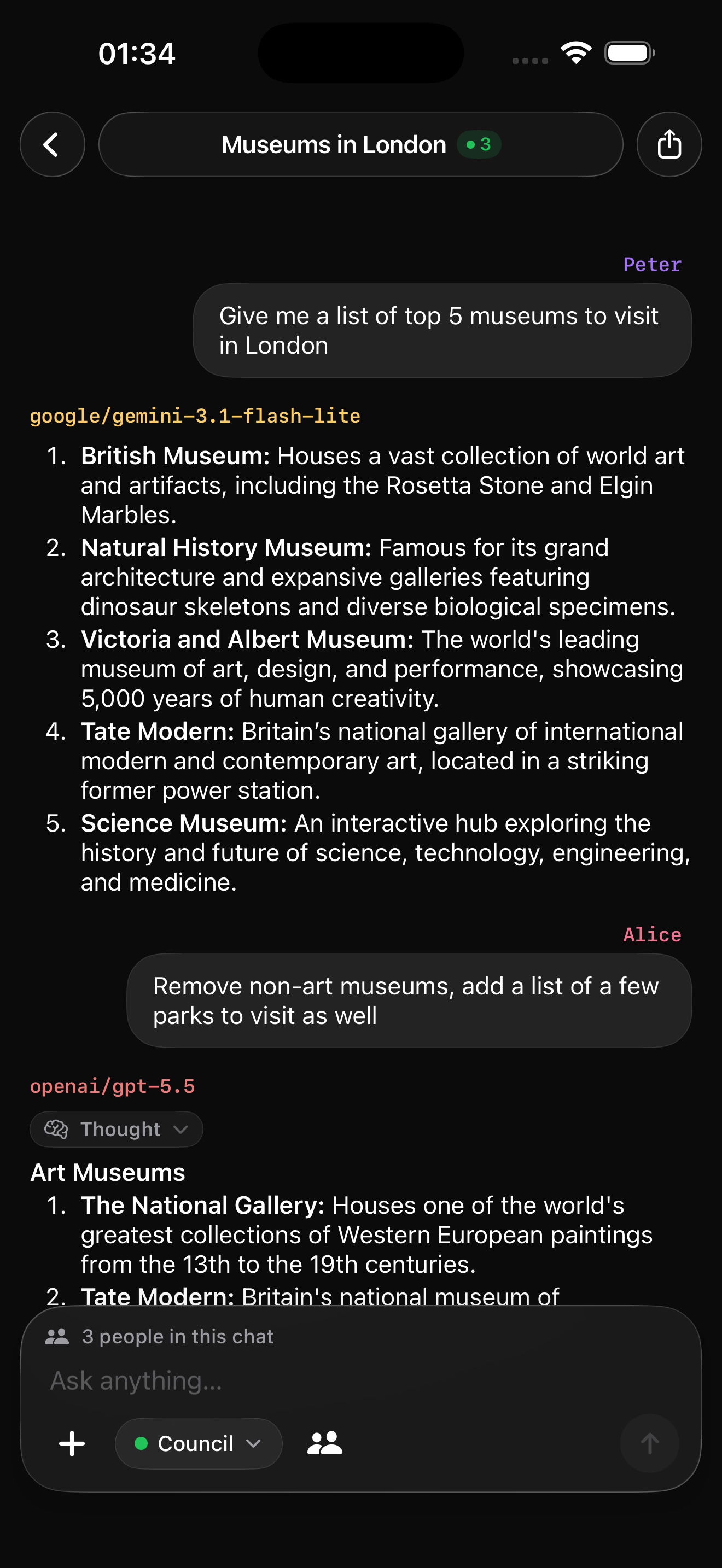
With Unium, you can invite a client into the original AI chat. They can read the history, add missing context in their own words, and ask a follow-up without starting again. Everyone works from the same conversation rather than separate summaries of it.
Choose whether the client can contribute
Sharing does not have to mean giving up control. Invite the client as a viewer when they only need to review the thread, or as an editor when their input should become part of the conversation. You keep ownership of the chat and can change access later.
Only the chat or project you choose is shared. Your other client work and private conversations remain separate.
Keep decisions beside the reasoning
A shared chat is useful when the work depends on several rounds of judgement:
- Turn a rough brief into clear questions.
- Compare approaches with different AI models.
- Ask the client to correct assumptions or supply constraints.
- Refine the work in the same thread.
- Leave the decision and its reasoning together for later.
You can switch between GPT, Claude, Gemini, and other available models without moving the client to a new conversation. The shared history remains the common source of context.
Chat access and payment stay separate
Inviting a client to a conversation does not automatically give them access to a wallet. You can fund the paid model usage yourself, share a wallet with selected collaborators, or let each person use a wallet they can access.
That separation is useful for fixed-fee work, client-funded research, and projects where the consultant wants to cover AI costs without buying another subscription for every participant.
Use professional judgement
The shared thread makes the process more visible, but it does not make an AI answer correct. Check important claims, protect confidential information, and keep professional decisions with the people responsible for the work.
If the engagement spans several conversations, place them in a shared project so the participants and project context stay organised. For a broader client-work setup, see the guide to a collaborative AI workspace for consultants.