
How the check works
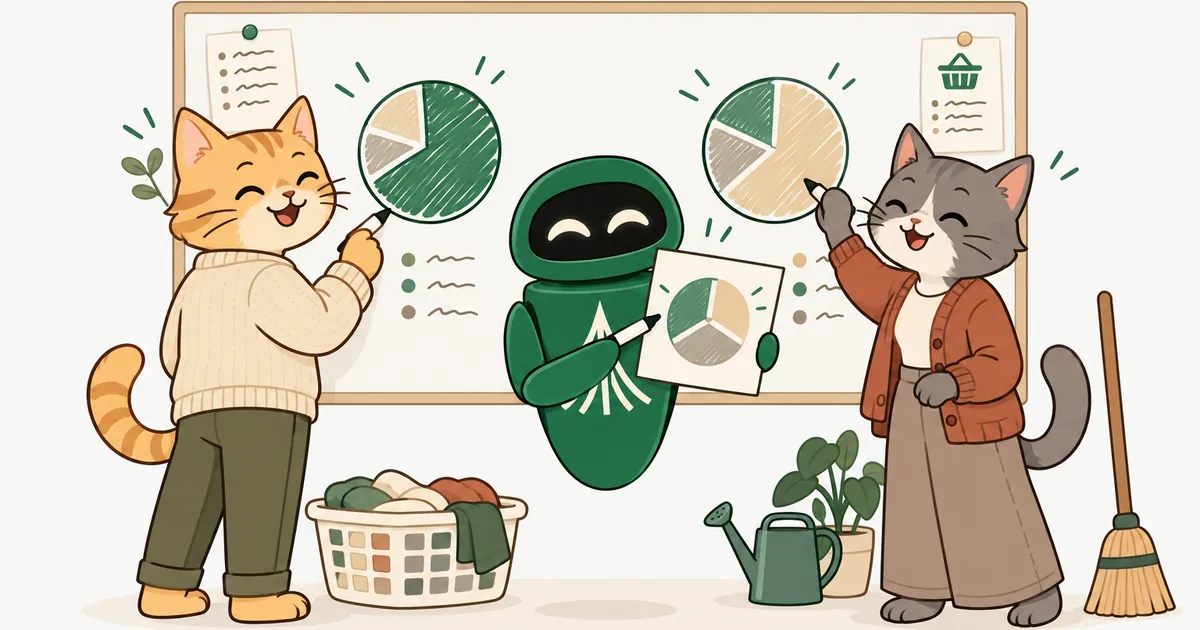
Each of you goes through eighteen household jobs and says who usually does each one, from "always me" to "always you". You answer on your own, so neither of you adjusts for the other. Skip anything that does not apply, like pets or children.
At the end, the check works out what share of the work each of you thinks you do. It shows the jobs where your answers disagree most, and the mental load on its own.
Why both of you think you do more
In studies of couples, both partners routinely estimate their own share of housework at more than half. Nobody is lying. You see every minute of your own effort, but you only see your partner's when you happen to be in the room.
The gap is widest for invisible work, the mental load: noticing the milk is running out, remembering the dentist, planning the week's meals. It takes real attention even when someone else then does the task. One partner often carries most of it without either of them naming it.
What to do with the result
- Talk about the disagreements, not the percentages. "You think the laundry is shared and I think I do it" is a solvable conversation. "I do 70%" is an argument.
- Make invisible jobs visible. Write the mental-load tasks down and give each one an owner. Owning a job means remembering it, not just doing it when asked.
- Trade by preference. Most people mind some jobs much less than others. Swapping the ones you each hate is the quickest fair win.
- Check again in a month. It takes a few weeks for a new split to settle in.
If money is part of the same argument, the bill split calculator helps you compare fair ways to share costs. If the topic keeps turning into a fight, the hard conversation planner helps with the opening.