
How the decider works
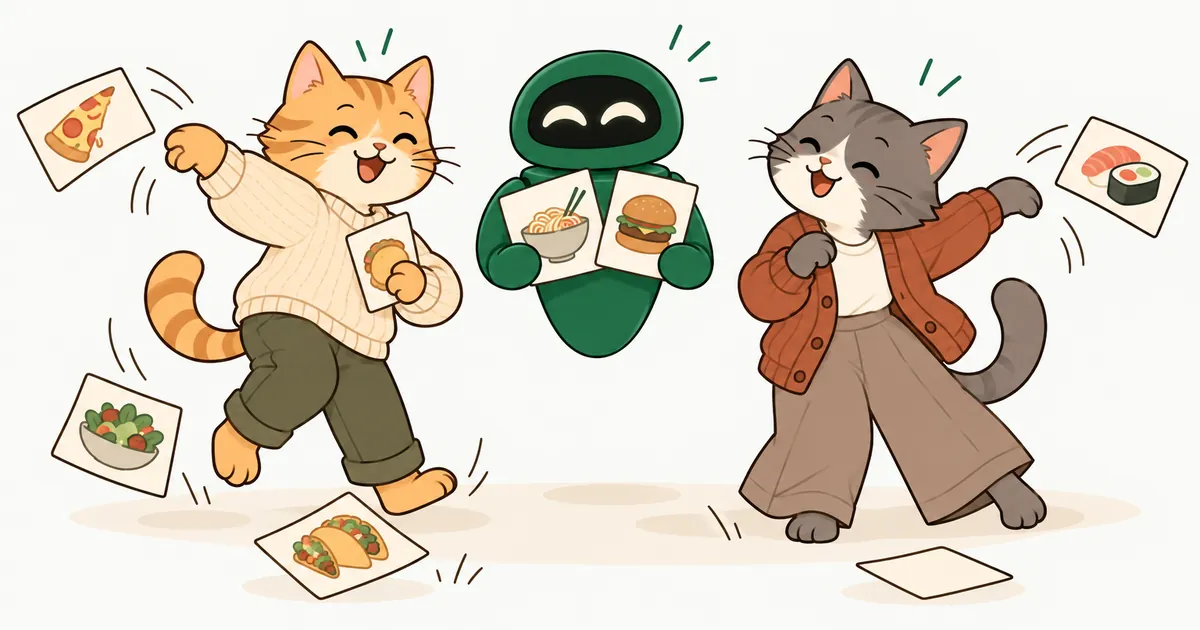
Pick a list, dinner or date night, or type your own options one per line. Tap away anything that is not possible tonight. Then a coin toss decides who goes first, and you take turns crossing off one option each. Whatever is left at the end is the answer.
It runs on one phone that you pass back and forth. Nothing is sent to us.
Why vetoes work better than choosing
"What do you want to eat?" "I don't mind, you pick." "Okay, pizza?" "Not pizza." Most couples know this loop. The problem is that picking feels like a responsibility: if the evening is disappointing, it was your choice. Ruling things out carries no such weight, and almost everyone has something they do not want.
Taking turns also keeps it fair. Each of you gets the same number of vetoes, give or take one, and the coin decides who gets the last one, so nobody can say the other always wins.
A few house rules
- The result is final. That is the whole point. If you want a rematch, play again with the other person first.
- Keep the list short. Six to ten options is a game; twenty is a chore.
- Use it for more than food. Which film, where to go on Saturday, which friend to visit first. For films in particular, the movie taste match finds the genres you both actually enjoy.
For decisions that matter more than dinner, like where to live or how to split the holidays, there is no coin that can settle it. The hard conversation planner helps you start that talk well.